Buy reuni.eu ?
We are moving the project
reuni.eu .
Are you interested in purchasing the domain
reuni.eu ?
domain@kv-gmbh.de · 0541-91531010
Buy reuni.eu ?
Why do religious people get circumcised?
Religious people get circumcised for a variety of reasons, depending on their faith. In Judaism, circumcision is a sign of the covenant between God and the Jewish people, as outlined in the Torah. In Islam, circumcision is considered a sign of cleanliness and purity, and is seen as a way to follow the example of the Prophet Muhammad. In some Christian traditions, circumcision may be practiced as a cultural or religious custom, but it is not a universal practice among Christians. Overall, religious circumcision is often seen as a way to demonstrate faith, obedience, and adherence to religious teachings. **
Why do religious people get involved everywhere?
Religious people often get involved in various aspects of society because their faith teaches them to serve and help others. Many religious teachings emphasize the importance of charity, compassion, and social justice, motivating believers to engage in activities that benefit their communities. Additionally, religious communities often provide a sense of belonging and support, encouraging their members to participate in a wide range of social, political, and humanitarian initiatives. Ultimately, the involvement of religious people in different spheres of society reflects their commitment to making a positive impact and living out their faith in practical ways. **


Similar search terms for Religious
Top-Angebote
Products related to Religious:
-
Lush Living Finds Christian Jesus Fridge Magnet Sticker, Religious Christmas Kitchen Magnets For Refrigerator Christian Jesus Fridge Magnet Sticker, Religious Christmas Kitchen Magnets For RefrigeratorEnhance Your Kitchen with a Touch of Faith Bring a festive, spiritual vibe to your home with our 9 peice Fridge Magnet Sticker. Designed with a Christian Jesus Christmas theme, this magnet is a beautiful reminder of faith, making it a perfect...34,97 $*Shipping: 0,00 $Secure redirect to the provider
-
Gathering Basket Wall Decor - Ballard Designs"At just 3"" deep, our Gathering Basket Wall Decor has a shallower profile than most gathering baskets, so it's perfect for a door or hallway. The traditional shape is hand woven of natural split rattan. Gathering Basket Wall Decor features:Fill it..."71,20 $*Shipping: 16,95 $Secure redirect to the provider




-
Are religious people more intelligent than non-religious people?
Intelligence is a complex and multifaceted trait that cannot be solely determined by a person's religious beliefs. There is no conclusive evidence to suggest that religious people are inherently more intelligent than non-religious people, as intelligence is influenced by a variety of factors such as genetics, environment, education, and life experiences. It is important to recognize that individuals of all religious and non-religious backgrounds have the capacity for intelligence and critical thinking. Therefore, it is not accurate to make generalizations about the intelligence of religious versus non-religious individuals. **
-
Can religious ultra-Orthodox be compared to religious extremists?
Religious ultra-Orthodox and religious extremists can share some similarities, such as a strict adherence to religious laws and traditions, and a resistance to modern secular influences. However, it is important to note that not all ultra-Orthodox individuals are extremists, and not all religious extremists are ultra-Orthodox. While some ultra-Orthodox groups may hold extreme views and engage in radical behavior, it is not accurate or fair to categorize all ultra-Orthodox individuals as extremists. It is important to approach each group or individual with an open mind and not make assumptions based on stereotypes. **
-
Are most religious people nicer than non-religious people?
It is not accurate to make a blanket statement about the behavior of most religious people compared to non-religious people. People's behavior is influenced by a variety of factors, including their individual personalities, upbringing, and personal beliefs. While some religious individuals may exhibit kindness and compassion as a result of their faith, there are also many non-religious individuals who demonstrate these qualities. It is important to recognize that kindness and compassion are not exclusive to any particular group and can be found in people of all backgrounds and beliefs. **
-
Why do non-religious people not celebrate religious holidays?
Non-religious people may choose not to celebrate religious holidays because they do not adhere to the beliefs or practices associated with those holidays. They may not find personal significance or meaning in the religious aspects of the holidays and therefore do not feel compelled to participate. Additionally, some non-religious individuals may prefer to celebrate holidays that align more closely with their own values and beliefs. **

Do you believe that all religious teachers are religious?
No, I do not believe that all religious teachers are necessarily religious themselves. While many religious teachers are indeed deeply religious and committed to their faith, there are also individuals who may teach about religion from a more academic or historical perspective without necessarily being personally religious. Additionally, some religious teachers may have a more spiritual or philosophical approach to their teachings rather than a strictly religious one. Therefore, it is important to recognize that religious teachers can come from a variety of backgrounds and perspectives. **
What do religious leaders say about other religious leaders?
Religious leaders often speak about other religious leaders with respect and admiration, acknowledging their dedication to serving their communities and spreading their faith. They may also emphasize the importance of interfaith dialogue and cooperation, promoting understanding and unity among different religious traditions. Additionally, religious leaders may highlight the shared values and teachings that are present in various faiths, emphasizing the common goal of promoting peace, compassion, and justice. Overall, religious leaders tend to express a message of mutual respect and cooperation when discussing their counterparts in other religious traditions. **
Top-Angebote
Products related to Religious:
-
Lush Living Finds Christian Jesus Fridge Magnet Sticker, Religious Christmas Kitchen Magnets For Refrigerator Christian Jesus Fridge Magnet Sticker, Religious Christmas Kitchen Magnets For RefrigeratorEnhance Your Kitchen with a Touch of Faith Bring a festive, spiritual vibe to your home with our 9 peice Fridge Magnet Sticker. Designed with a Christian Jesus Christmas theme, this magnet is a beautiful reminder of faith, making it a perfect...34,97 $*Shipping: 0,00 $Secure redirect to the provider
-
Why do religious people get circumcised?
Religious people get circumcised for a variety of reasons, depending on their faith. In Judaism, circumcision is a sign of the covenant between God and the Jewish people, as outlined in the Torah. In Islam, circumcision is considered a sign of cleanliness and purity, and is seen as a way to follow the example of the Prophet Muhammad. In some Christian traditions, circumcision may be practiced as a cultural or religious custom, but it is not a universal practice among Christians. Overall, religious circumcision is often seen as a way to demonstrate faith, obedience, and adherence to religious teachings. **
-
Why do religious people get involved everywhere?
Religious people often get involved in various aspects of society because their faith teaches them to serve and help others. Many religious teachings emphasize the importance of charity, compassion, and social justice, motivating believers to engage in activities that benefit their communities. Additionally, religious communities often provide a sense of belonging and support, encouraging their members to participate in a wide range of social, political, and humanitarian initiatives. Ultimately, the involvement of religious people in different spheres of society reflects their commitment to making a positive impact and living out their faith in practical ways. **
-
Are religious people more intelligent than non-religious people?
Intelligence is a complex and multifaceted trait that cannot be solely determined by a person's religious beliefs. There is no conclusive evidence to suggest that religious people are inherently more intelligent than non-religious people, as intelligence is influenced by a variety of factors such as genetics, environment, education, and life experiences. It is important to recognize that individuals of all religious and non-religious backgrounds have the capacity for intelligence and critical thinking. Therefore, it is not accurate to make generalizations about the intelligence of religious versus non-religious individuals. **
-
Can religious ultra-Orthodox be compared to religious extremists?
Religious ultra-Orthodox and religious extremists can share some similarities, such as a strict adherence to religious laws and traditions, and a resistance to modern secular influences. However, it is important to note that not all ultra-Orthodox individuals are extremists, and not all religious extremists are ultra-Orthodox. While some ultra-Orthodox groups may hold extreme views and engage in radical behavior, it is not accurate or fair to categorize all ultra-Orthodox individuals as extremists. It is important to approach each group or individual with an open mind and not make assumptions based on stereotypes. **
Similar search terms for Religious
-
Gathering Basket Wall Decor - Ballard Designs"At just 3"" deep, our Gathering Basket Wall Decor has a shallower profile than most gathering baskets, so it's perfect for a door or hallway. The traditional shape is hand woven of natural split rattan. Gathering Basket Wall Decor features:Fill it..."71,20 $*Shipping: 16,95 $Secure redirect to the provider
-
Vintage The Gathering by Anne EnrightWinner of the Man Booker PrizeThe nine surviving children of the Hegarty clan gather in Dublin for the wake of their wayward brother Liam. It wasn't the drink that killed him - although that certainly helped - it was what happened to him as a boy in his grandmother's house, in the winter of 1968.The Gathering is a novel about love and disappointment, about thwarted lust and limitless desire, and how our fate is written in the body, not in the stars.7,49 £*Shipping: 2,99 £Secure redirect to the provider
-
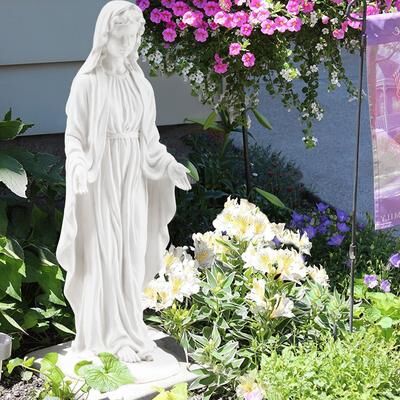
EROMMY Outdoor Religious Statue - Waterproof Garden Decor for Patio, Porch, and Courtyard【Elegant Garden Statue】 Add a touch of elegance to your garden or home with this beautifully crafted statue. Made from premium magnesium oxide, it features lifelike details and a refined finish that brings a sense of peace and harmony to any space.75,68 $*Shipping: 0,00 $Secure redirect to the provider
-
Are most religious people nicer than non-religious people?
It is not accurate to make a blanket statement about the behavior of most religious people compared to non-religious people. People's behavior is influenced by a variety of factors, including their individual personalities, upbringing, and personal beliefs. While some religious individuals may exhibit kindness and compassion as a result of their faith, there are also many non-religious individuals who demonstrate these qualities. It is important to recognize that kindness and compassion are not exclusive to any particular group and can be found in people of all backgrounds and beliefs. **
-
Why do non-religious people not celebrate religious holidays?
Non-religious people may choose not to celebrate religious holidays because they do not adhere to the beliefs or practices associated with those holidays. They may not find personal significance or meaning in the religious aspects of the holidays and therefore do not feel compelled to participate. Additionally, some non-religious individuals may prefer to celebrate holidays that align more closely with their own values and beliefs. **
-
Do you believe that all religious teachers are religious?
No, I do not believe that all religious teachers are necessarily religious themselves. While many religious teachers are indeed deeply religious and committed to their faith, there are also individuals who may teach about religion from a more academic or historical perspective without necessarily being personally religious. Additionally, some religious teachers may have a more spiritual or philosophical approach to their teachings rather than a strictly religious one. Therefore, it is important to recognize that religious teachers can come from a variety of backgrounds and perspectives. **
-
What do religious leaders say about other religious leaders?
Religious leaders often speak about other religious leaders with respect and admiration, acknowledging their dedication to serving their communities and spreading their faith. They may also emphasize the importance of interfaith dialogue and cooperation, promoting understanding and unity among different religious traditions. Additionally, religious leaders may highlight the shared values and teachings that are present in various faiths, emphasizing the common goal of promoting peace, compassion, and justice. Overall, religious leaders tend to express a message of mutual respect and cooperation when discussing their counterparts in other religious traditions. **
* All prices are inclusive of VAT and, if applicable, plus shipping costs. The offer information is based on the details provided by the respective shop and is updated through automated processes. Real-time updates do not occur, so deviations can occur in individual cases. ** Note: Parts of this content were created by AI.