Buy reuni.eu ?
We are moving the project
reuni.eu .
Are you interested in purchasing the domain
reuni.eu ?
domain@kv-gmbh.de · 0541-91531010
Buy reuni.eu ?
Do the planets fit together?
Yes, the planets in our solar system fit together in a specific order based on their distance from the sun. The inner planets, Mercury, Venus, Earth, and Mars, are rocky and relatively small, while the outer planets, Jupiter, Saturn, Uranus, and Neptune, are gas giants and much larger. The planets' orbits also fit together in a pattern, with the inner planets orbiting closer to the sun and the outer planets orbiting farther away. This arrangement of the planets is a result of the formation of the solar system from a rotating disk of gas and dust. **
Why are the inner planets rocky planets and the outer planets gas planets?
The inner planets, Mercury, Venus, Earth, and Mars, are rocky planets because they formed closer to the sun where it was hotter. The intense heat caused lighter elements like hydrogen and helium to be blown away, leaving behind heavier elements like rock and metal. In contrast, the outer planets, Jupiter, Saturn, Uranus, and Neptune, are gas planets because they formed farther from the sun where it was cooler. This allowed lighter elements to remain in their atmospheres, creating their gas giant composition. **


Similar search terms for Planets
Top-Angebote
Products related to Planets:
-
DK Children DK Eyewitness Collection 10 Books Set - Shakespeare, Ancient Rome, Ancient Greece, Human Body, Animal, Mythology, Ocean, Planets and MoreDk Eyewitness Titles in this set: Shakespeare Ancient Rome Ancient Greece Human Body Animal Volcano & Earthquake Mythology Ocean Periodic Table Planets18,98 £*Shipping: 2,99 £Secure redirect to the provider
-
Perfect Picks Market Planets Space Ball For Stress Relief, Solar System Stress Ball, Educational Toy For Kids And Adults 1pc Planet RandomStress Relief and Fun for All Ages Unwind and relax with the Solar System Stress Ball for Kids and adults. This soothing, squishy ball helps alleviate stress while offering a fun, educational experience. Whether you're a child learning about the...29,97 $*Shipping: 0,00 $Secure redirect to the provider
-
Arcturus Children's Encyclopedia of Space by Giles Sparrow Visual Guide to the Universe, Planets, Stars & Solar System Astronomy Reference Book for KidsJourney beyond Earth and discover the wonders of the cosmos with Children's Encyclopedia of Space: A Visual Guide to the Universe by Giles Sparrow. Part of the Arcturus Children's Reference Library, this engaging visual encyclopedia introduces young readers to the fascinating world of space, astronomy and the universe. Explore the Solar System, planets, moons, stars, galaxies and other extraordinary objects in space while developing an understanding of the vast universe beyond our planet. Presented as an accessible visual reference guide, the book makes complex astronomical topics engaging and easier for young readers to explore. Ideal for children fascinated by planets, stars, space exploration and astronomy, this encyclopedia encourages curiosity and provides a useful resource for independent reading, homework, school projects and general knowledge. Whether learning about our neighbouring planets or exploring the mysteries of distant stars and galaxies, Children's Encyclopedia of Space is a valuable addition to any young space enthusiast's bookshelf. Key Features Engaging children's space encyclopedia Written by astronomy author Giles Sparrow A visual guide to the universe and outer space Explores planets, stars, moons, galaxies and the Solar System Introduces astronomy in an accessible format for young readers Ideal for school projects, homework and independent learning Part of the Arcturus Children's Reference Library Excellent educational gift for young space and science enthusiasts5,99 £*Shipping: 2,99 £Secure redirect to the provider
-
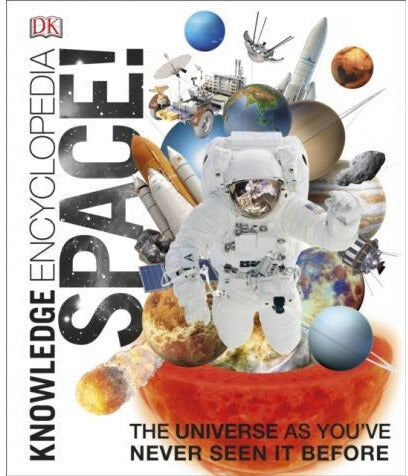
Dorling Kindersley DK Knowledge Encyclopedia Space The Ultimate Space & Astronomy Reference Guide for Kids and Families - Planets, Stars, Galaxies & the Universe ExplainExplore the wonders of the universe with the DK Knowledge Encyclopedia Space, an inspiring and visually stunning guide to outer space.Packed with high-definition photographs, 3D illustrations, infographics, facts, timelines, and scientific explanations, this encyclopedia takes readers on an unforgettable journey from Earth to the farthest reaches of the cosmos. Perfect for curious readers, young astronomers, and space enthusiasts, this book explains: The solar system, planets, moons, and dwarf planets Stars, nebulas, black holes, galaxies & cosmic phenomena Space exploration, astronauts & spacecraft The Big Bang, universe evolution & future missions The latest science discoveries explained in kid-friendly language A brilliant educational book for STEM learners, classrooms, home libraries, and children aged 8–14 who love space.9,99 £*Shipping: 2,99 £Secure redirect to the provider



-
How do planets get their color?
Planets get their color from a combination of factors such as their composition, atmosphere, and the presence of certain chemicals and minerals. For example, the reddish color of Mars comes from iron oxide (rust) on its surface, while the bluish color of Neptune is due to the presence of methane in its atmosphere. The color of a planet can also be influenced by the way its surface reflects and absorbs sunlight. Overall, the unique combination of these factors determines the color of each planet in our solar system. **
-
Are stars planets?
No, stars are not planets. Stars are massive celestial bodies that produce light and heat through nuclear fusion, while planets are smaller celestial bodies that orbit around stars. Stars are much larger and hotter than planets, and they are the primary sources of light and energy in a solar system. **
-
Are these planets?
No, the objects in the image are not planets. They appear to be moons or satellites orbiting a larger celestial body. Planets are celestial bodies that orbit a star, such as our sun, whereas moons are natural satellites that orbit planets. **
-
Why do gas planets have more moons than rocky planets?
Gas planets have more moons than rocky planets because their larger size and stronger gravitational pull allow them to capture and retain more moons. Additionally, gas planets are formed further from the sun where there is more material available for moon formation. The presence of a thick atmosphere on gas planets also helps in capturing passing objects and turning them into moons. **

Why are planets with life forms better than planets without?
Planets with life forms are better than planets without because they offer the potential for diverse ecosystems, which can contribute to the overall health and balance of the planet. Life forms also have the ability to adapt and evolve, making the planet more resilient to changes in the environment. Additionally, the presence of life forms can lead to the development of complex and intricate relationships within the ecosystem, enhancing the overall biodiversity and beauty of the planet. **
What is the difference between gas planets and rocky planets?
Gas planets, such as Jupiter and Saturn, are primarily composed of gases like hydrogen and helium, with a small rocky core at their center. They have thick atmospheres and lack a solid surface. In contrast, rocky planets, like Earth and Mars, are primarily composed of solid materials such as rock and metal. They have a defined solid surface and a much thinner atmosphere compared to gas planets. **
Top-Angebote
Products related to Planets:
-
Highlights Plenty of Planets Sheet SetPlanets and stars in bright colored hues make the perfect sheets for your outer space enthusiast. The Highlights Brilliant Butterflies Sheet Set looks fantastic layered under a hidden picture quilt or coordinated with your favorite bedding.36,10 $*Shipping: 0,00 $Secure redirect to the provider
-
Highlights Plenty of Planets Reversible Comforter SetGive your little loved one the creative spark they need with this Plenty of Planets Reversible Comforter Set from Highlights. Complete with coordinating pillowcases this comforter set will be a staple in any child's bedroom.85,99 $*Shipping: 0,00 $Secure redirect to the provider
-
DK Children DK Eyewitness Collection 10 Books Set - Shakespeare, Ancient Rome, Ancient Greece, Human Body, Animal, Mythology, Ocean, Planets and MoreDk Eyewitness Titles in this set: Shakespeare Ancient Rome Ancient Greece Human Body Animal Volcano & Earthquake Mythology Ocean Periodic Table Planets18,98 £*Shipping: 2,99 £Secure redirect to the provider
-
Perfect Picks Market Planets Space Ball For Stress Relief, Solar System Stress Ball, Educational Toy For Kids And Adults 1pc Planet RandomStress Relief and Fun for All Ages Unwind and relax with the Solar System Stress Ball for Kids and adults. This soothing, squishy ball helps alleviate stress while offering a fun, educational experience. Whether you're a child learning about the...29,97 $*Shipping: 0,00 $Secure redirect to the provider
-
Do the planets fit together?
Yes, the planets in our solar system fit together in a specific order based on their distance from the sun. The inner planets, Mercury, Venus, Earth, and Mars, are rocky and relatively small, while the outer planets, Jupiter, Saturn, Uranus, and Neptune, are gas giants and much larger. The planets' orbits also fit together in a pattern, with the inner planets orbiting closer to the sun and the outer planets orbiting farther away. This arrangement of the planets is a result of the formation of the solar system from a rotating disk of gas and dust. **
-
Why are the inner planets rocky planets and the outer planets gas planets?
The inner planets, Mercury, Venus, Earth, and Mars, are rocky planets because they formed closer to the sun where it was hotter. The intense heat caused lighter elements like hydrogen and helium to be blown away, leaving behind heavier elements like rock and metal. In contrast, the outer planets, Jupiter, Saturn, Uranus, and Neptune, are gas planets because they formed farther from the sun where it was cooler. This allowed lighter elements to remain in their atmospheres, creating their gas giant composition. **
-
How do planets get their color?
Planets get their color from a combination of factors such as their composition, atmosphere, and the presence of certain chemicals and minerals. For example, the reddish color of Mars comes from iron oxide (rust) on its surface, while the bluish color of Neptune is due to the presence of methane in its atmosphere. The color of a planet can also be influenced by the way its surface reflects and absorbs sunlight. Overall, the unique combination of these factors determines the color of each planet in our solar system. **
-
Are stars planets?
No, stars are not planets. Stars are massive celestial bodies that produce light and heat through nuclear fusion, while planets are smaller celestial bodies that orbit around stars. Stars are much larger and hotter than planets, and they are the primary sources of light and energy in a solar system. **
Similar search terms for Planets
-
Arcturus Children's Encyclopedia of Space by Giles Sparrow Visual Guide to the Universe, Planets, Stars & Solar System Astronomy Reference Book for KidsJourney beyond Earth and discover the wonders of the cosmos with Children's Encyclopedia of Space: A Visual Guide to the Universe by Giles Sparrow. Part of the Arcturus Children's Reference Library, this engaging visual encyclopedia introduces young readers to the fascinating world of space, astronomy and the universe. Explore the Solar System, planets, moons, stars, galaxies and other extraordinary objects in space while developing an understanding of the vast universe beyond our planet. Presented as an accessible visual reference guide, the book makes complex astronomical topics engaging and easier for young readers to explore. Ideal for children fascinated by planets, stars, space exploration and astronomy, this encyclopedia encourages curiosity and provides a useful resource for independent reading, homework, school projects and general knowledge. Whether learning about our neighbouring planets or exploring the mysteries of distant stars and galaxies, Children's Encyclopedia of Space is a valuable addition to any young space enthusiast's bookshelf. Key Features Engaging children's space encyclopedia Written by astronomy author Giles Sparrow A visual guide to the universe and outer space Explores planets, stars, moons, galaxies and the Solar System Introduces astronomy in an accessible format for young readers Ideal for school projects, homework and independent learning Part of the Arcturus Children's Reference Library Excellent educational gift for young space and science enthusiasts5,99 £*Shipping: 2,99 £Secure redirect to the provider
-
Dorling Kindersley DK Knowledge Encyclopedia Space The Ultimate Space & Astronomy Reference Guide for Kids and Families - Planets, Stars, Galaxies & the Universe ExplainExplore the wonders of the universe with the DK Knowledge Encyclopedia Space, an inspiring and visually stunning guide to outer space.Packed with high-definition photographs, 3D illustrations, infographics, facts, timelines, and scientific explanations, this encyclopedia takes readers on an unforgettable journey from Earth to the farthest reaches of the cosmos. Perfect for curious readers, young astronomers, and space enthusiasts, this book explains: The solar system, planets, moons, and dwarf planets Stars, nebulas, black holes, galaxies & cosmic phenomena Space exploration, astronauts & spacecraft The Big Bang, universe evolution & future missions The latest science discoveries explained in kid-friendly language A brilliant educational book for STEM learners, classrooms, home libraries, and children aged 8–14 who love space.9,99 £*Shipping: 2,99 £Secure redirect to the provider
-
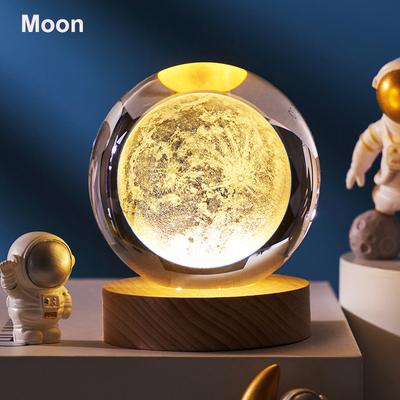
Evergreen Home Goods Astronomy Solar System Crystal Ball, LED Light Up Globe With Planets, Moon, And Astronaut For Home Desk Decor moonGaze into the heart of a miniature universe with our breathtaking Solar System Crystal Ball. This isn't just a decoration; it's a captivating portal to the stars, designed to ignite your imagination and bring the profound beauty of the cosmos right...29,97 $*Shipping: 0,00 $Secure redirect to the provider
-
Gathering Basket Wall Decor - Ballard Designs"At just 3"" deep, our Gathering Basket Wall Decor has a shallower profile than most gathering baskets, so it's perfect for a door or hallway. The traditional shape is hand woven of natural split rattan. Gathering Basket Wall Decor features:Fill it..."71,20 $*Shipping: 16,95 $Secure redirect to the provider
-
Are these planets?
No, the objects in the image are not planets. They appear to be moons or satellites orbiting a larger celestial body. Planets are celestial bodies that orbit a star, such as our sun, whereas moons are natural satellites that orbit planets. **
-
Why do gas planets have more moons than rocky planets?
Gas planets have more moons than rocky planets because their larger size and stronger gravitational pull allow them to capture and retain more moons. Additionally, gas planets are formed further from the sun where there is more material available for moon formation. The presence of a thick atmosphere on gas planets also helps in capturing passing objects and turning them into moons. **
-
Why are planets with life forms better than planets without?
Planets with life forms are better than planets without because they offer the potential for diverse ecosystems, which can contribute to the overall health and balance of the planet. Life forms also have the ability to adapt and evolve, making the planet more resilient to changes in the environment. Additionally, the presence of life forms can lead to the development of complex and intricate relationships within the ecosystem, enhancing the overall biodiversity and beauty of the planet. **
-
What is the difference between gas planets and rocky planets?
Gas planets, such as Jupiter and Saturn, are primarily composed of gases like hydrogen and helium, with a small rocky core at their center. They have thick atmospheres and lack a solid surface. In contrast, rocky planets, like Earth and Mars, are primarily composed of solid materials such as rock and metal. They have a defined solid surface and a much thinner atmosphere compared to gas planets. **
* All prices are inclusive of VAT and, if applicable, plus shipping costs. The offer information is based on the details provided by the respective shop and is updated through automated processes. Real-time updates do not occur, so deviations can occur in individual cases. ** Note: Parts of this content were created by AI.