Buy reuni.eu ?
We are moving the project
reuni.eu .
Are you interested in purchasing the domain
reuni.eu ?
domain@kv-gmbh.de · 0541-91531010
Buy reuni.eu ?
When can a baby sit in a stroller?
Babies can typically start sitting in a stroller around 6 months of age when they have developed enough head and neck control to sit upright comfortably. It is important to always follow the manufacturer's guidelines for when it is safe for a baby to use a stroller. **
When should a baby be able to sit?
Babies typically begin to sit independently between 4 to 7 months of age. However, every baby develops at their own pace, so it's important to remember that these are just general guidelines. It's important to provide plenty of opportunities for your baby to practice sitting with support and to strengthen their muscles. If you have concerns about your baby's development, it's best to consult with a pediatrician. **
Similar search terms for Baby-Trend-Sit-N
Top-Angebote
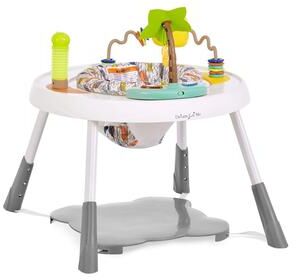
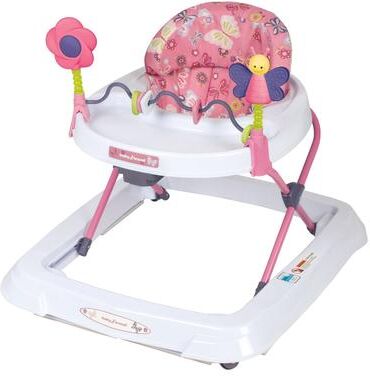
Products related to Baby-Trend-Sit-N:
-
How can I encourage my baby to sit up?
To encourage your baby to sit up, you can start by placing toys or objects slightly out of reach while they are lying down. This will motivate them to try and reach for the objects, which can help strengthen their core muscles. You can also provide support by sitting behind them and gently helping them balance as they try to sit up on their own. Additionally, using pillows or cushions around them can provide extra support and stability as they practice sitting up. **
-
When can a baby sit in such a seat?
A baby can typically sit in a seat designed for them once they have developed enough head and neck control to support themselves. This usually occurs around 4-6 months of age. It's important to ensure that the seat is appropriate for the baby's size and weight, and to always follow the manufacturer's guidelines for proper usage. Additionally, it's important to never leave a baby unattended in a seat, and to always use safety straps to secure them in place. **
-
'How do I get the n out of ln(n+1)?'
To get the n out of ln(n+1), you can use the property of logarithms that allows you to bring the exponent down as a coefficient. This property states that ln(a) = b is equivalent to e^b = a. So, in the case of ln(n+1), you can rewrite it as e^(ln(n+1)) = n+1. Then, you can subtract 1 from both sides to isolate the n, giving you n = e^(ln(n+1)) - 1. **
-
'How do I get n?'
To get the value of n, you need to have a specific context or equation in which n is used. If n is a variable in an equation, you can solve for n by isolating it on one side of the equation. If n represents a quantity or number in a problem, you need to have enough information to calculate or determine its value. In general, getting the value of n requires understanding the context in which it is used and using appropriate mathematical or logical methods to find its value. **

'N or n-sample in statistics?'
In statistics, an N-sample refers to a sample size of N, where N represents the number of individual observations or data points in the sample. The letter N is often used to denote the size of a sample in statistical analysis. It is important to have a sufficiently large sample size (N) to ensure the reliability and validity of statistical results. A larger sample size generally leads to more accurate and precise estimates of population parameters. **
"Do you sit together on the plane?"
Yes, we usually sit together on the plane. We prefer to sit next to each other so we can easily communicate and share the experience of the flight. It also allows us to support each other and make the journey more enjoyable. If possible, we try to book seats together when we make our travel arrangements. **
Top-Angebote
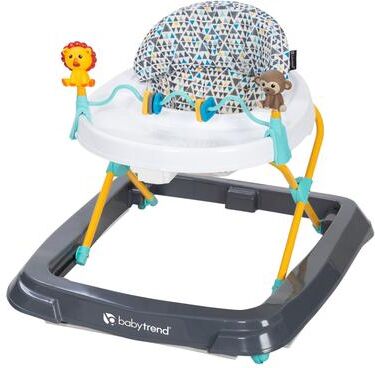
Products related to Baby-Trend-Sit-N:
-
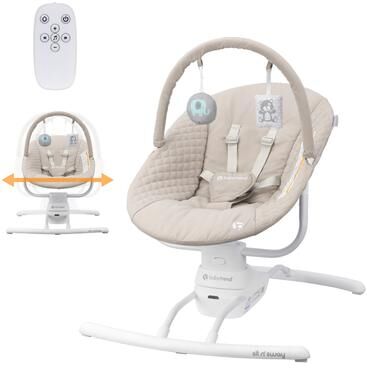
Baby Trend Sit N' Sway Portable Swing, Dash TanThe world is bustling, but the Baby Trend Sit N' Sway Swing will bring comfort and tranquility to both you and your little one. The Sit N' Sway features three swaying speeds and eight melodies to keep your baby calm and entertained.99,99 $*Shipping: 0,00 $Secure redirect to the provider
-
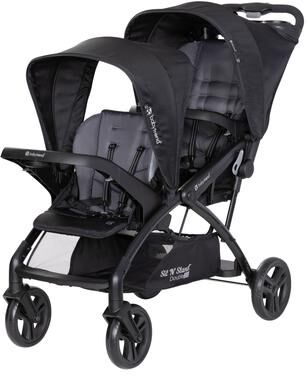
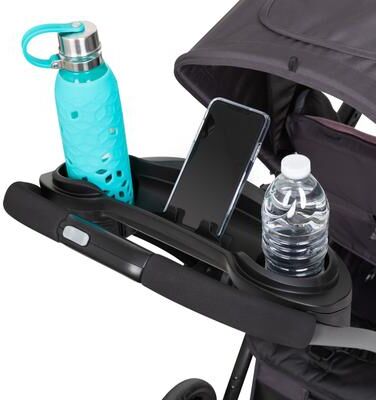
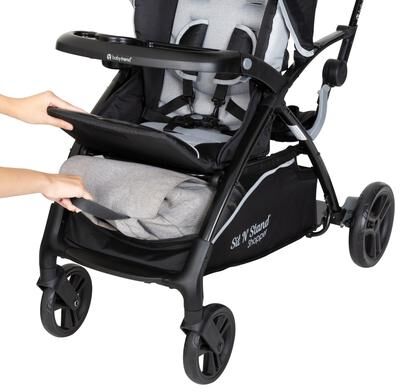
Baby Trend Sit N' Stand® Double 2.0 Stroller, Dash BlackStreamlined, single front wheels allow for an easy push and a more compact footprint for the new Sit N' Stand Double 2.0. Your two will stroll in quality, comfort and style with this redesigned favorite of growing families.214,99 $*Shipping: 0,00 $Secure redirect to the provider
-
When can a baby sit in a stroller?
Babies can typically start sitting in a stroller around 6 months of age when they have developed enough head and neck control to sit upright comfortably. It is important to always follow the manufacturer's guidelines for when it is safe for a baby to use a stroller. **
-
When should a baby be able to sit?
Babies typically begin to sit independently between 4 to 7 months of age. However, every baby develops at their own pace, so it's important to remember that these are just general guidelines. It's important to provide plenty of opportunities for your baby to practice sitting with support and to strengthen their muscles. If you have concerns about your baby's development, it's best to consult with a pediatrician. **
-
How can I encourage my baby to sit up?
To encourage your baby to sit up, you can start by placing toys or objects slightly out of reach while they are lying down. This will motivate them to try and reach for the objects, which can help strengthen their core muscles. You can also provide support by sitting behind them and gently helping them balance as they try to sit up on their own. Additionally, using pillows or cushions around them can provide extra support and stability as they practice sitting up. **
-
When can a baby sit in such a seat?
A baby can typically sit in a seat designed for them once they have developed enough head and neck control to support themselves. This usually occurs around 4-6 months of age. It's important to ensure that the seat is appropriate for the baby's size and weight, and to always follow the manufacturer's guidelines for proper usage. Additionally, it's important to never leave a baby unattended in a seat, and to always use safety straps to secure them in place. **
Similar search terms for Baby-Trend-Sit-N
-
'How do I get the n out of ln(n+1)?'
To get the n out of ln(n+1), you can use the property of logarithms that allows you to bring the exponent down as a coefficient. This property states that ln(a) = b is equivalent to e^b = a. So, in the case of ln(n+1), you can rewrite it as e^(ln(n+1)) = n+1. Then, you can subtract 1 from both sides to isolate the n, giving you n = e^(ln(n+1)) - 1. **
-
'How do I get n?'
To get the value of n, you need to have a specific context or equation in which n is used. If n is a variable in an equation, you can solve for n by isolating it on one side of the equation. If n represents a quantity or number in a problem, you need to have enough information to calculate or determine its value. In general, getting the value of n requires understanding the context in which it is used and using appropriate mathematical or logical methods to find its value. **
-
'N or n-sample in statistics?'
In statistics, an N-sample refers to a sample size of N, where N represents the number of individual observations or data points in the sample. The letter N is often used to denote the size of a sample in statistical analysis. It is important to have a sufficiently large sample size (N) to ensure the reliability and validity of statistical results. A larger sample size generally leads to more accurate and precise estimates of population parameters. **
-
"Do you sit together on the plane?"
Yes, we usually sit together on the plane. We prefer to sit next to each other so we can easily communicate and share the experience of the flight. It also allows us to support each other and make the journey more enjoyable. If possible, we try to book seats together when we make our travel arrangements. **
* All prices are inclusive of VAT and, if applicable, plus shipping costs. The offer information is based on the details provided by the respective shop and is updated through automated processes. Real-time updates do not occur, so deviations can occur in individual cases. ** Note: Parts of this content were created by AI.