Buy reuni.eu ?
We are moving the project
reuni.eu .
Are you interested in purchasing the domain
reuni.eu ?
domain@kv-gmbh.de · 0541-91531010
Buy reuni.eu ?
What is the gambler's fallacy?
The gambler's fallacy is the mistaken belief that if a certain event has occurred more frequently than usual in the past, it is less likely to happen in the future, and vice versa. For example, if a coin has landed on heads several times in a row, someone might believe that it is "due" to land on tails. In reality, each coin flip is an independent event and is not influenced by previous outcomes. This fallacy can lead people to make poor decisions in gambling or other situations where chance is involved. **
What is a fallacy in combinatorics?
A fallacy in combinatorics is a mistaken belief or argument based on faulty reasoning related to counting or arranging objects. It often involves making incorrect assumptions or using flawed logic when solving problems related to permutations, combinations, or probability. Common fallacies in combinatorics include misunderstanding the fundamental principles of counting, misinterpreting the meaning of a problem, or overlooking certain constraints or conditions. It is important to be aware of these fallacies in order to avoid making errors when working on combinatorial problems. **
Similar search terms for Fallacy
Top-Angebote
Products related to Fallacy:
-
What is the fallacy in Schrödinger's cat?
The fallacy in Schrödinger's cat thought experiment lies in the assumption that a cat can exist in a superposition of being both alive and dead at the same time. This is not possible in the macroscopic world, as it violates our everyday experience and the principles of classical physics. The thought experiment was designed to illustrate the concept of superposition in quantum mechanics, but it has been criticized for its unrealistic and paradoxical nature. In reality, the cat would either be alive or dead, not both simultaneously. **
-
What is the moral justification for the naturalistic fallacy?
The moral justification for the naturalistic fallacy is rooted in the belief that what is natural is inherently good or right. This perspective argues that because something occurs in nature, it must be morally acceptable or desirable. However, this reasoning is flawed as it conflates descriptive statements about the way things are in nature with prescriptive statements about how things ought to be morally. Just because something is natural does not automatically make it morally right or ethical. **
-
Can someone explain to me what a naturalistic fallacy is?
The naturalistic fallacy is a philosophical concept that refers to the idea that just because something is natural, it is therefore good or right. This fallacy occurs when someone argues that something is morally acceptable or desirable simply because it is natural or occurs in nature. However, the naturalistic fallacy fails to consider that what is natural is not always morally good, and what is morally good is not always natural. It is important to recognize that the naturalistic fallacy can lead to flawed reasoning and ethical judgments. **
-
What is the difference between practical syllogism and naturalistic fallacy?
Practical syllogism is a form of reasoning that involves making decisions or taking action based on practical considerations and goals. It is a type of reasoning that focuses on what should be done in a particular situation. On the other hand, naturalistic fallacy is a logical error that occurs when someone assumes that because something is natural, it is therefore good or right. It is a mistake in reasoning that confuses descriptive claims about what is natural with prescriptive claims about what ought to be done. In summary, practical syllogism is a form of practical reasoning, while naturalistic fallacy is a logical error related to assumptions about what is natural. **
What is the difference between Hume's Law and the naturalistic fallacy?
Hume's Law, also known as the is-ought problem, is a philosophical principle articulated by the philosopher David Hume. It states that one cannot derive an "ought" (a moral or prescriptive statement) from an "is" (a descriptive statement about the way things are). In other words, just because something is a certain way, it does not necessarily mean that it ought to be that way. The naturalistic fallacy, on the other hand, is a specific type of error in reasoning that occurs when someone tries to derive a moral conclusion from a natural or descriptive premise. This fallacy is often associated with the philosopher G.E. Moore, who used it to criticize attempts to define "good" in terms of some natural property, such as pleasure or happiness. In summary, Hume's Law is a broader philosophical principle about the relationship between descriptive and prescriptive statements, while the naturalistic fallacy is a specific type of error that violates this principle by attempting to derive **
What fallacy of the Salafists becomes apparent in the following sentence?
The fallacy of the Salafists that becomes apparent in the following sentence is the appeal to tradition. Salafists often argue that their beliefs and practices are the most authentic because they are based on the traditions of the early Muslim community, known as the Salaf. However, this argument overlooks the fact that the Salafist interpretation of these traditions is just one among many, and that the early Muslim community was diverse and had differing opinions on many issues. This fallacy assumes that the Salafist interpretation is the only valid one, ignoring the complexity and diversity of Islamic tradition. **
Top-Angebote
Products related to Fallacy:
-
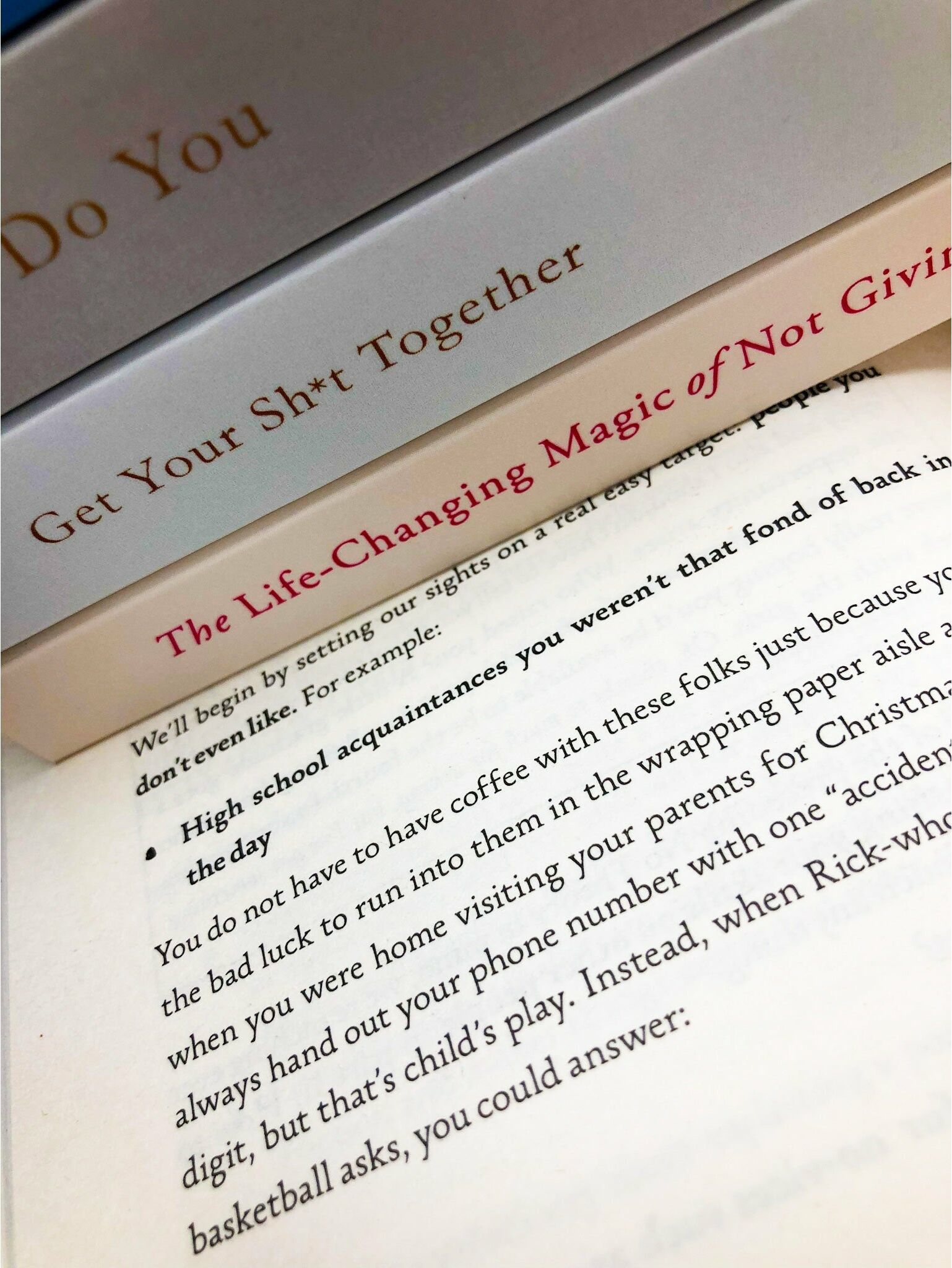
Quercus A No Fcks Given Guide Series Books 1–5 Collection Box Set by Sarah Knight – The Life-Changing Magic of Not Giving a Fck, Get Your Sh*t Together & SelfA No F*cks Given Guide Series Books 1 - 5 Collection Box Set by Sarah Knight (The Life-Changing Magic of Not Giving a F*ck, You Do You, Get Your Sh*t Together, Calm the F**k Down & F**K No!) The Life-Changing Magic of Not Giving a F**k This irreverent and practical book explains how to rid yourself of unwanted obligations, shame, and guilt - and give your f**ks instead to people and things that make you happy. From family dramas to having a bikini body, the simple 'NotSorry Method' for mental decluttering will help you unleash the power of not giving a f**k and will free you to spend your time. Get Your Sh*t Together In The Life-Changing Magic of Not Giving a F**k, 'anti-guru' Sarah Knight introduced the joys of mental decluttering. Get Your Sh*t Together takes you one stop further - organizing the f*cks you want and need to give to help you quit your day job and move abroad. You Do You Being yourself should be the easiest thing in the world. Yet instead of leaning in to who we are, we fight it, listening too closely to what society tells us. You Do You helps you shake off those expectations, say f**k perfect, start looking out for number one and keep on with your badass self. Calm the F**k Down When life hands you a big fat f**king lemon, Calm the F**k Down gives you practical ways to manage the situation, not to mention your anxiety about the situation. One hundred per cent practical and zero percent Pollyanna-ish, this is a book that acknowledges all the bad shit that can and probably will happen to you. F**k No! For Sarah, saying no is easy.For the rest of us, it's stress-inducing, blood pressure-raising, teeth-grinding hard.But it doesn't have to be. F**k No! is filled with tips, techniques, and practical strategies that will arm you with not only permission to decline.18,70 £*Shipping: 2,99 £Secure redirect to the provider
-
What is the gambler's fallacy?
The gambler's fallacy is the mistaken belief that if a certain event has occurred more frequently than usual in the past, it is less likely to happen in the future, and vice versa. For example, if a coin has landed on heads several times in a row, someone might believe that it is "due" to land on tails. In reality, each coin flip is an independent event and is not influenced by previous outcomes. This fallacy can lead people to make poor decisions in gambling or other situations where chance is involved. **
-
What is a fallacy in combinatorics?
A fallacy in combinatorics is a mistaken belief or argument based on faulty reasoning related to counting or arranging objects. It often involves making incorrect assumptions or using flawed logic when solving problems related to permutations, combinations, or probability. Common fallacies in combinatorics include misunderstanding the fundamental principles of counting, misinterpreting the meaning of a problem, or overlooking certain constraints or conditions. It is important to be aware of these fallacies in order to avoid making errors when working on combinatorial problems. **
-
What is the fallacy in Schrödinger's cat?
The fallacy in Schrödinger's cat thought experiment lies in the assumption that a cat can exist in a superposition of being both alive and dead at the same time. This is not possible in the macroscopic world, as it violates our everyday experience and the principles of classical physics. The thought experiment was designed to illustrate the concept of superposition in quantum mechanics, but it has been criticized for its unrealistic and paradoxical nature. In reality, the cat would either be alive or dead, not both simultaneously. **
-
What is the moral justification for the naturalistic fallacy?
The moral justification for the naturalistic fallacy is rooted in the belief that what is natural is inherently good or right. This perspective argues that because something occurs in nature, it must be morally acceptable or desirable. However, this reasoning is flawed as it conflates descriptive statements about the way things are in nature with prescriptive statements about how things ought to be morally. Just because something is natural does not automatically make it morally right or ethical. **
Similar search terms for Fallacy
-
Can someone explain to me what a naturalistic fallacy is?
The naturalistic fallacy is a philosophical concept that refers to the idea that just because something is natural, it is therefore good or right. This fallacy occurs when someone argues that something is morally acceptable or desirable simply because it is natural or occurs in nature. However, the naturalistic fallacy fails to consider that what is natural is not always morally good, and what is morally good is not always natural. It is important to recognize that the naturalistic fallacy can lead to flawed reasoning and ethical judgments. **
-
What is the difference between practical syllogism and naturalistic fallacy?
Practical syllogism is a form of reasoning that involves making decisions or taking action based on practical considerations and goals. It is a type of reasoning that focuses on what should be done in a particular situation. On the other hand, naturalistic fallacy is a logical error that occurs when someone assumes that because something is natural, it is therefore good or right. It is a mistake in reasoning that confuses descriptive claims about what is natural with prescriptive claims about what ought to be done. In summary, practical syllogism is a form of practical reasoning, while naturalistic fallacy is a logical error related to assumptions about what is natural. **
-
What is the difference between Hume's Law and the naturalistic fallacy?
Hume's Law, also known as the is-ought problem, is a philosophical principle articulated by the philosopher David Hume. It states that one cannot derive an "ought" (a moral or prescriptive statement) from an "is" (a descriptive statement about the way things are). In other words, just because something is a certain way, it does not necessarily mean that it ought to be that way. The naturalistic fallacy, on the other hand, is a specific type of error in reasoning that occurs when someone tries to derive a moral conclusion from a natural or descriptive premise. This fallacy is often associated with the philosopher G.E. Moore, who used it to criticize attempts to define "good" in terms of some natural property, such as pleasure or happiness. In summary, Hume's Law is a broader philosophical principle about the relationship between descriptive and prescriptive statements, while the naturalistic fallacy is a specific type of error that violates this principle by attempting to derive **
-
What fallacy of the Salafists becomes apparent in the following sentence?
The fallacy of the Salafists that becomes apparent in the following sentence is the appeal to tradition. Salafists often argue that their beliefs and practices are the most authentic because they are based on the traditions of the early Muslim community, known as the Salaf. However, this argument overlooks the fact that the Salafist interpretation of these traditions is just one among many, and that the early Muslim community was diverse and had differing opinions on many issues. This fallacy assumes that the Salafist interpretation is the only valid one, ignoring the complexity and diversity of Islamic tradition. **
* All prices are inclusive of VAT and, if applicable, plus shipping costs. The offer information is based on the details provided by the respective shop and is updated through automated processes. Real-time updates do not occur, so deviations can occur in individual cases. ** Note: Parts of this content were created by AI.